
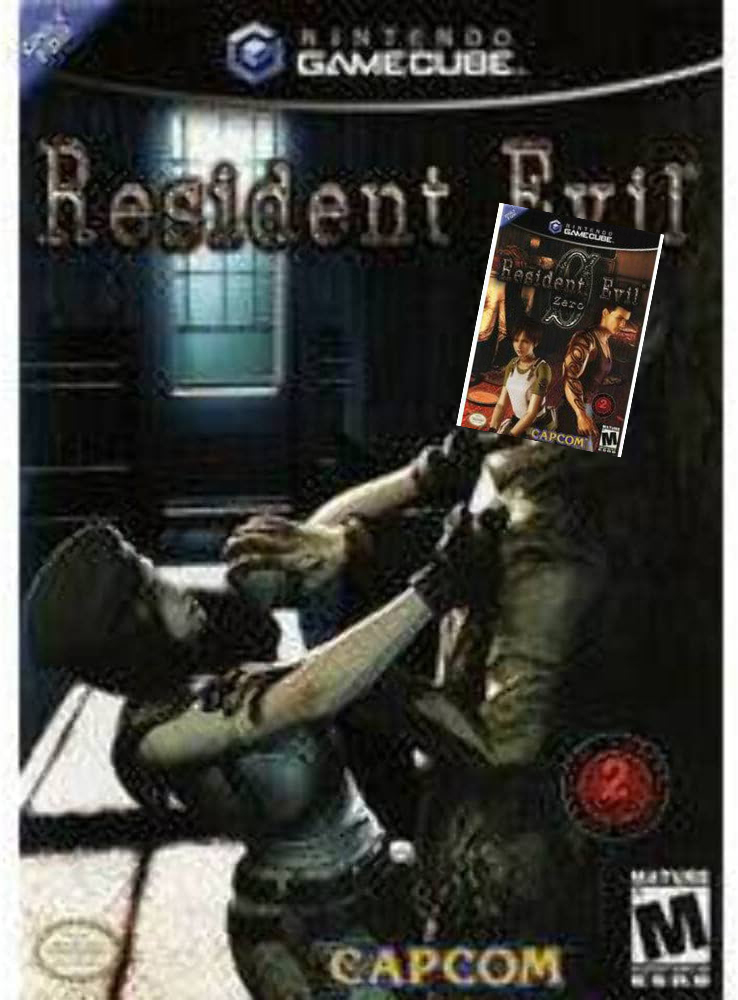
Since fully immersing myself in the gaming community, I have ever only gotten into one knock-down drag-out gaming debate. On a Discord server with my local game store’s regulars, I made a bold claim: Resident Evil on the GameCube stinks.
I’ve come off that opinion a little bit in the years since, and I recognize that just because I do not like a game does not mean it is a bad game. But I had just gotten through an hour of Resident Evil, and I was legitimately peeved by how far from my expectations the game was. It probably did not help that my introduction to the Resident Evil franchise was Resident Evil 4 for the Wii and that I was going into the first entry blind, but I preferred to let blind rage win the day after my first go.
Needless to say, it was an unpopular opinion, although I admit I perceived far more slights than were actually present. It got to the point where the store’s enforcer pulled me aside in DMs to tell me to calm the hell down. The store boss is a good friend and a sweet person, but she is terrifying when she needs to be and is not to be trifled with, so I backed off.
Years later, I gave Resident Evil 0 a try despite warnings from the same people who came to the defense of Resident Evil during my tirade. This time I was not going in blind, and I was expecting a worse version of the game I already did not like.
Until the day I die I will contend that I was pleasantly surprised.
The elements of Resident Evil that made me want to rip my hair out were still present to some degree, but they had been retooled or updated to be far more reasonable. Simply put, I could tell that Resident Evil Zero had released after Resident Evil and had been developed with the latter game’s weaknesses in mind. There were three major areas of improvement that to me made Resident Evil Zero the better game:
The tank controls make more sense
Both Resident Evil and Resident Evil Zero are survival horror games and use tank controls, and try as I might, there is nothing I can do about that. Personally I am of the opinion that tank controls are a vestigial component left from Alone in the Dark on the TurboGrafx 16 that do not add anything to the horror experience, and my evidence for this is the lack of modern horror games that still use tank controls. That being said, I seem to have a minority opinion when compared to die-hard horror fans who have played more than just Resident Evil, and again, no amount of complaining can remove tank controls from either game.
But I found the tank controls in Resident Evil Zero far less frustrating or confusing than I did in Resident Evil because of the layout of the environments. The areas in Resident Evil Zero lend themselves to the walk-straight-then-adjust tank controls, particularly the beginning on the train. It makes no difference whether the controls make it impossible to move with any sort of agility when all you need to do is walk backwards and forwards, and I would contend that this comes without sacrificing too much in terms of atmosphere. Even the lab feels like the stretches of walkway are long enough to allow the player to operate without needing to do much turning.
Compare that to Spencer Mansion in Resident Evil with its twisty corridors and tight spaces. Sure, there are the occasional long hallways, but one of the very first major events in the game requires you to try to strafe a zombie who was making a snack of your friend in a small room. It is especially annoying when time is of the essence, like when the player needs to race to collect green herbs for Rebecca to heal your squad mate. Yes, one could argue that the controls add to the stress of the experience and therefore creates a better horror experience as a whole, but compensating for a lack of stress using shoddy game mechanics feels lazy to me.
The saves are no longer as big of an issue
I was about ready to kill somebody when I discovered how Resident Evil handled saving the game. I was familiar with the typewriter system from Resident Evil 4, but it boggled my mind that I had to find my own saves in the form of ink ribbons within the game. The player can find a maximum of 30 saves across ten locations throughout the entire game on normal difficulty, with zero indication as to how many saves the player has remaining or when and where they can get more.
There is zero feasible explanation for why the save system is this way. It does not add to the horror element of the game, and in fact it does not add anything to the game at all. The only thing it does is make me debate whether I should stay up an extra two hours looking for ink ribbons or go to sleep with the GameCube turned on. Looking online, it seems lots of players are able to get on just fine with the saves they get, and that’s good for them, but I am somebody who takes longer on average to fully beat a game, and that means I might pop the game in ten to fifteen times before I’m through with it. That’s at least a third of my saves right there going towards turning off the GameCube. Maybe it’s my own fault for moseying through games, but I would rather that my less-than-ideal play did not unnecessarily preclude me from saving my game.
Resident Evil Zero also uses the ink ribbon save system, and in evaluating the game by itself I would consider it a weakness. However, the number of ink ribbons in the game on normal difficulty jumps from 30 to 46, with 16 locations to pick them up. Take that with the fact that Resident Evil Zero is a touch shorter than Resident Evil and suddenly the ink ribbon save system goes from a problem to just a nuisance. In a perfect world, neither game would have ink ribbons, but it presents less of an issue in Resident Evil Zero. At this rate, only about a quarter of my saves would go towards turning the GameCube off, and while that is not ideal, I can live with that.
The knife does a thing
The survival knife in Resident Evil is there mostly as a practical joke. While it is possible to kill enemies with the survival knife, it takes almost a minute per zombie and it comes at the cost of a significant amount of health. I was under the impression that the knife did not do any damage at all when I first tried to use it, and I figured that it was intentionally useless to add to the feeling of terror in the beginning of the game. My guess is that the knife is as ineffective as it is in order to keep players from hoarding ammunition and therefore never finding themselves in dire situations, but the developers took this to a ridiculous degree.
In Resident Evil Zero, the knife is the most difficult weapon to kill an enemy with, and the zombie will more than likely get a hit in before succumbing to the stab wounds, but the player can reliably kill with the knife in a reasonable amount of time. It feels more like a knife in modern Resident Evil games, where using it is more of a mad scramble rather than a futile endeavor. The player still cannot rely entirely on the knife throughout the game, but the knife still has a noticeable effect on enemies.
I can appreciate just how revolutionary the Resident Evil remake on the GameCube was. Nearly every element from the original PlayStation game got an upgrade, particularly the visuals and voice acting. But they could have done so much more with that opportunity, and it is so frustrating to see night and day improvements in the game next to elements that fall woefully short of modern standards. Resident Evil Zero offers a comparable experience to Resident Evil with some significant improvements to core game elements, such as the knife and ink ribbons. So yes, Resident Evil on the GameCube is a greater achievement than Resident Evil Zero, and it likely did more for the franchise in terms of giving players a better introduction to the original games. But overall, when objectively analyzing the two games, Resident Evil Zero is just better.



 GAME WRECKS
Leave a comment