
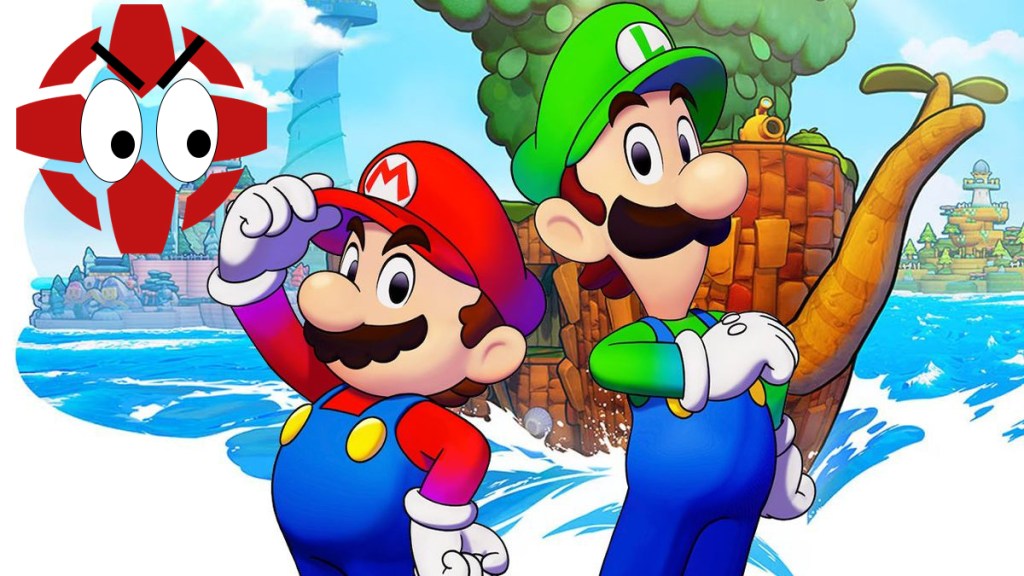
IGN has been busy on Twitter lately:

IGN reviewer Logan Plant was not a fan of what he played from Nintendo’s latest Mario RPG installment Mario and Luigi: Brothership, giving the game a 5/10. However, both he and IGN quickly found out upon the game’s release that he held a minority opinion, with both fans and critics alike generally praising the game for its new art style and entertaining take on the traditional Mario RPG game formula.
When I say the majority of reviewers vehemently disagree with IGN’s position on Mario and Luigi: Brothership, I’m talking about this-game-might-get-tossed-around-in-Game-of-the-Year-conversations levels of disagreement. Mario and Luigi: Brothership sports a 79 on Metacritic, a metric that, in fairness, is brought down by more reviewers than just IGN. Fans of the series, however, have fallen in love with the game and have generally deemed it a worthy successive installment in Mario’s RPG lineage.
As a fellow game journalist, I understand how lonely it is being the lone negative reviewer of a game.
I for one have my share of gaming hot takes: Everything about PaRappa the Rapper annoys me, the tank controls of the first Resident Evil game make the game completely unplayable for me and it kills me that Metroid: Prime didn’t just use the same control scheme Halo used a couple years prior. I understand that the majority of the gamer population absolutely loves those games, and I would be hesitant to call these games bad, but the opinions are my own and I would not back off of them. I actually have a lot of admiration for Plant for sticking to his guns and giving his true opinions on the game, no matter what others think.
I can further understand IGN standing behind their guy. People forget that one individual is responsible for reviewing the game, and then IGN throws their name and brand behind that opinion. It can be scary sometimes, both for the reviewer and for the publication. It involves a lot of mutual trust, and I can respect the fact that IGN is still willing to stand behind their reviewer’s take despite the overwhelming majority of reviewers vehemently disagreeing with him.
But there’s a difference between standing by your guy and shouting down everybody else’s guys.
Digital Foundry also gave Mario and Luigi: Brothership a 5/10, giving similar criticisms to IGN’s Plant. However, DF posted their review on Twitter once and moved on. IGN, as of Monday, Nov 11, has declared their dissatisfaction to Mario’s new RPG seven times on Twitter.
The behavior gives off a tone of argumentative self importance, changing the narrative from “this is what we think about the game,” to “you’re wrong for not thinking this about this game.” IGN does not do this with other reviews, and in fact as far as I could tell IGN has never reposted a review of any game seven times over. Other than maybe increasing site traffic, this is not doing IGN any favors and it is certainly not doing any kind of service to Plant. It feels like a combative response to those questioning the publication’s motives after the infamous 7/10 rating of the doomed hero-shooter Concord.
An unpopular review does not damage the credibility of a publication, no matter what Twitter thinks. And it is important for the marketplace of ideas to have differing viewpoints. What does harm a publication’s standing in the public eye is a perception of animosity as a result of disagreement, which comes off as ragebaiting and ultimately hurts both the publication and the reviewer.


 GAME WRECKS
Leave a comment